 English (UK)
  Nederlands
  Deutsch
  Español
  简体中文
简体中文 


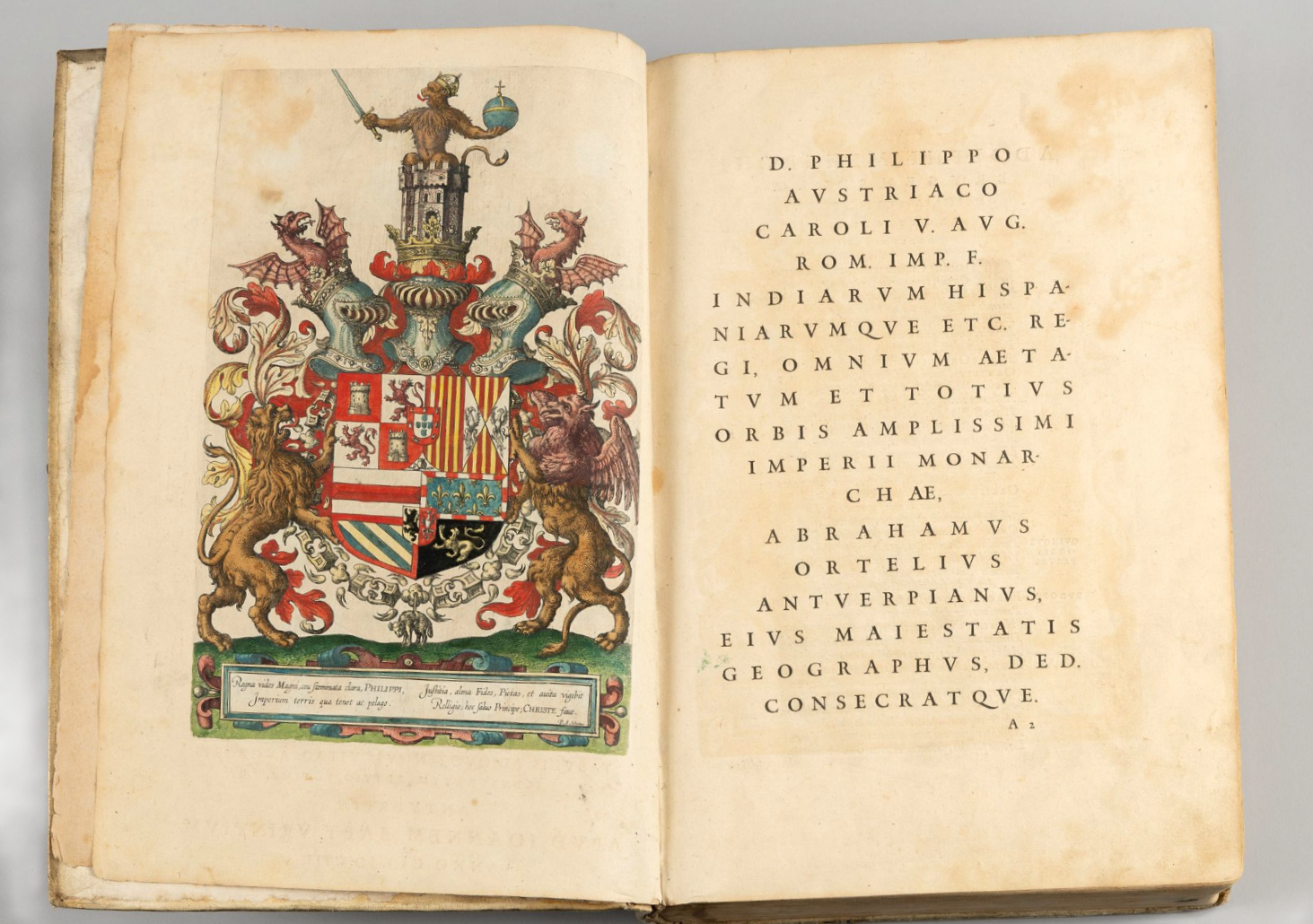


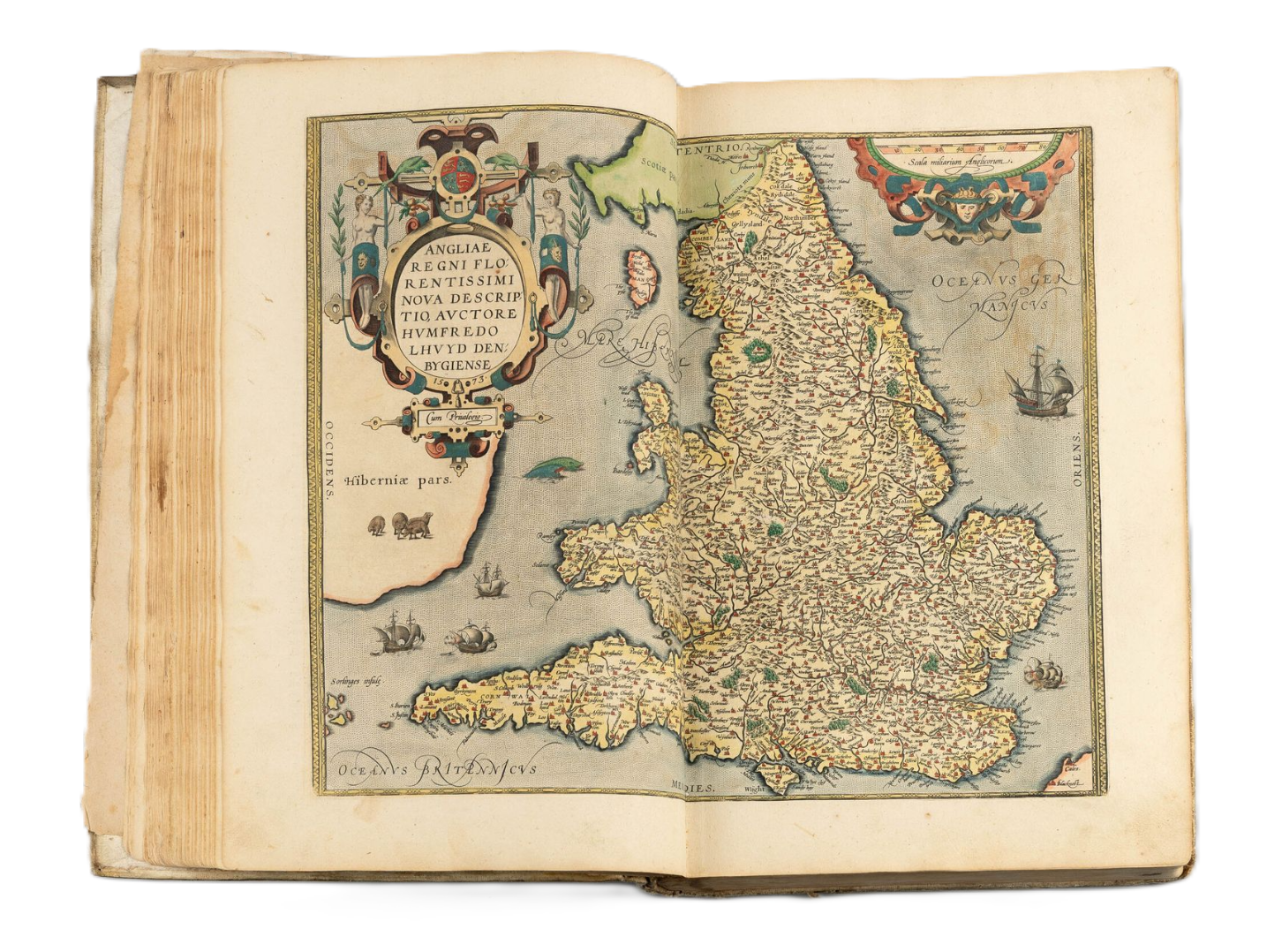


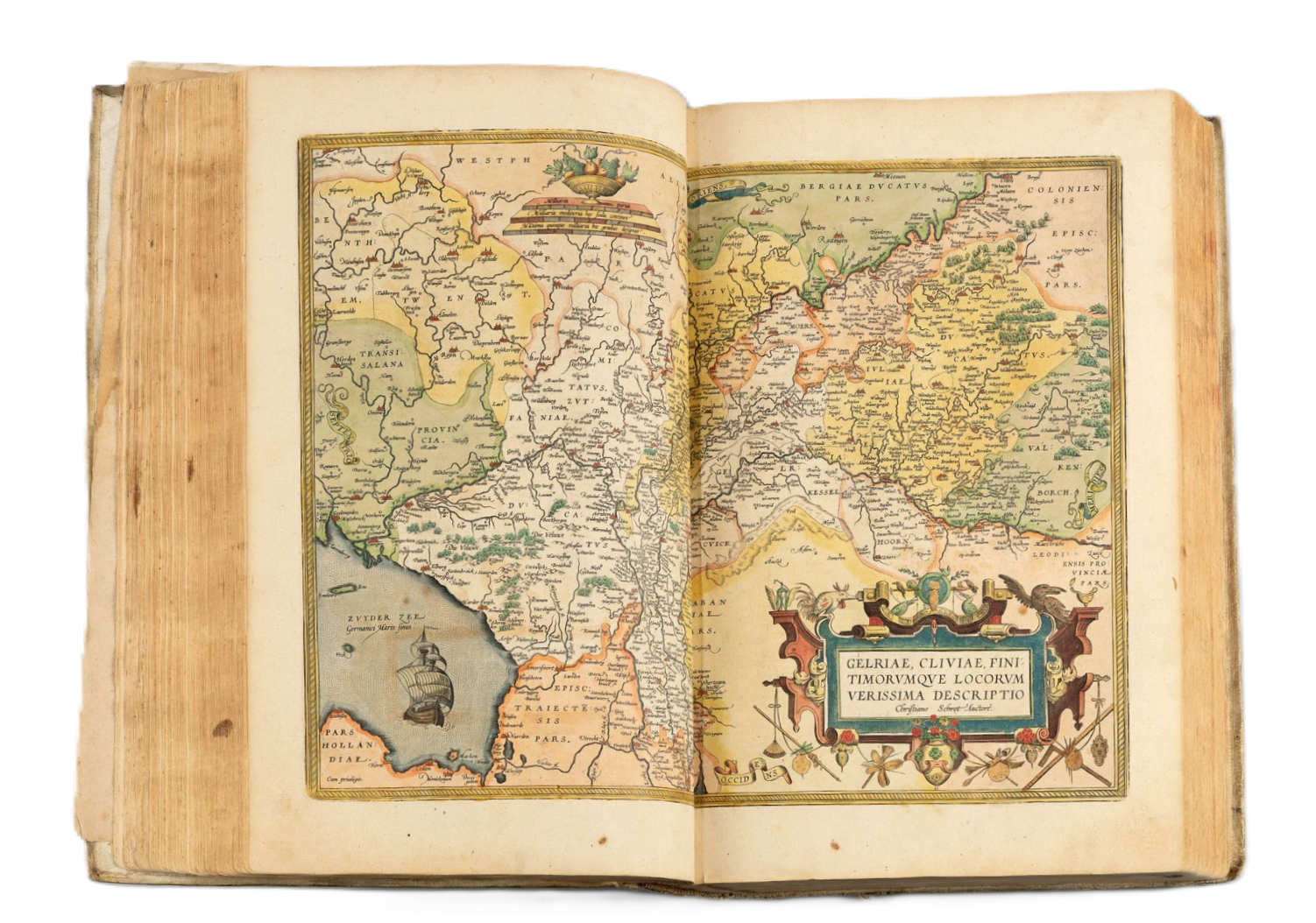


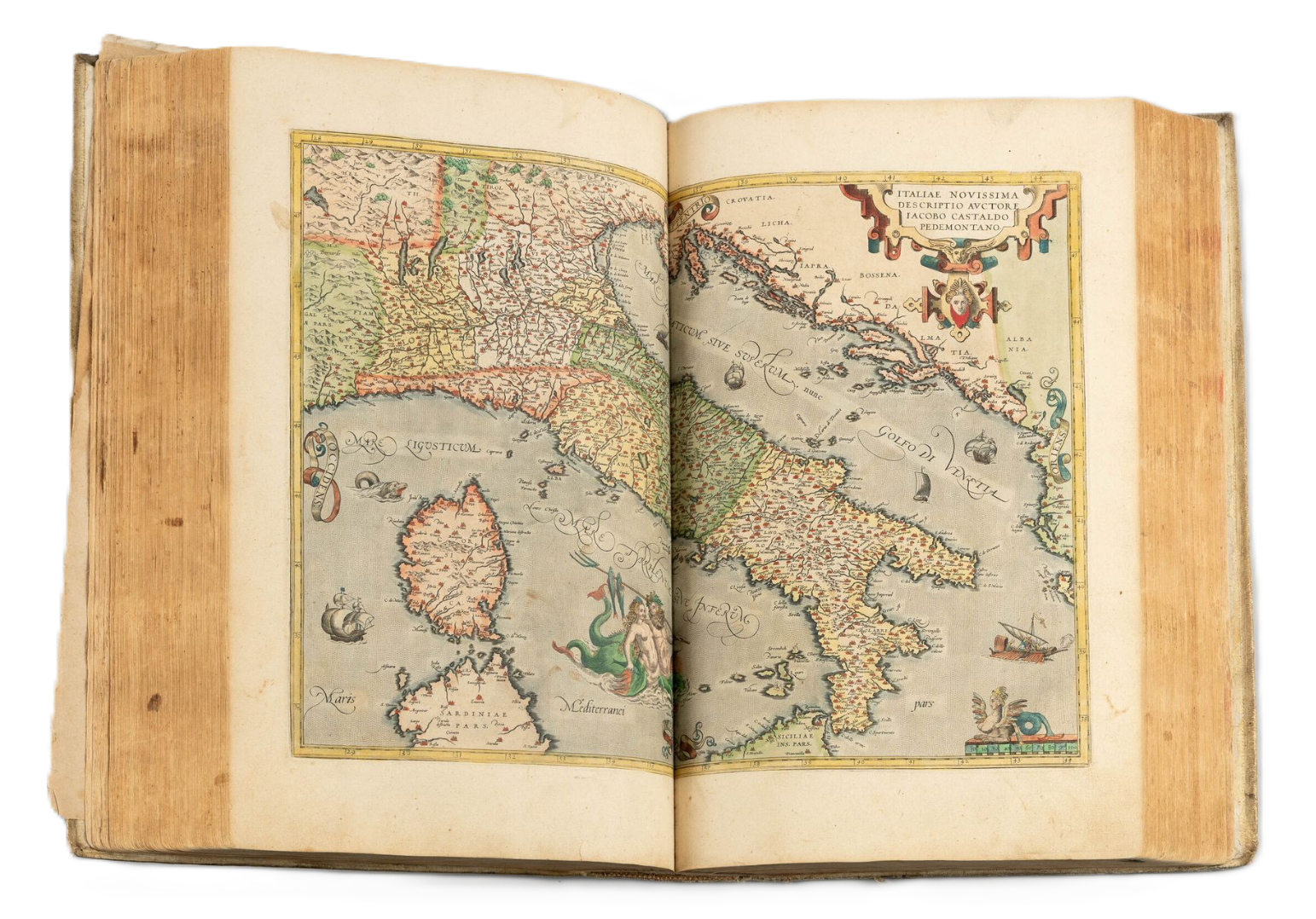
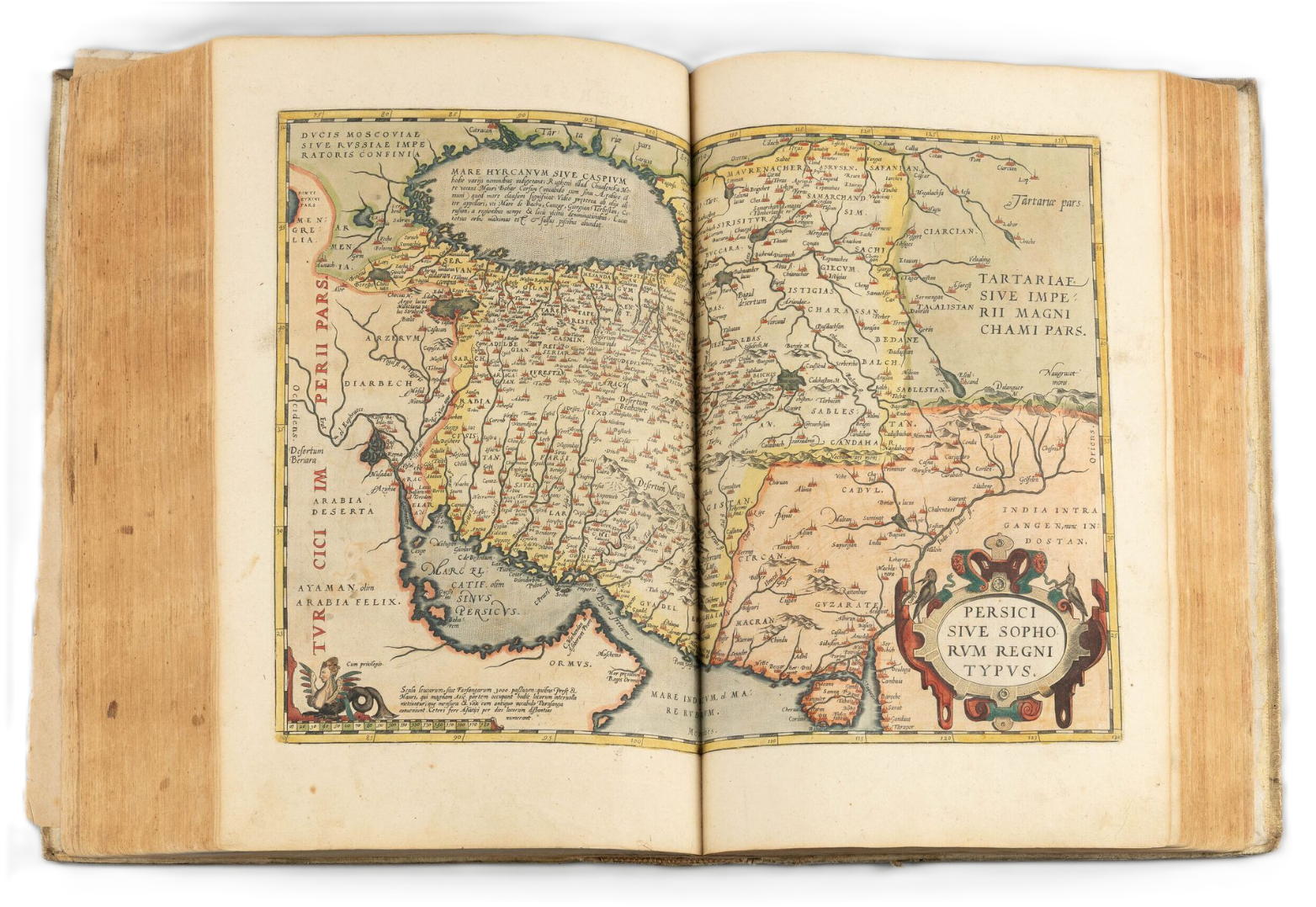


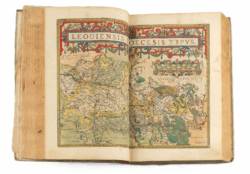
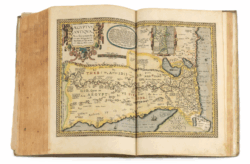


A perfectly complete copy of the Theatrum Orbis Terrarum, the Parergon and the Nomenclator Ptolemaicus in its original colors
| Author | |
|---|---|
| Year of Publication | 1603 |
| Publisher | |
| Product Number | 12725 |
Theatrum orbis terrarium [followed by] Parergon, sive veteris Geograpiae aliquot tabulae [followed by] Nomenclator Ptolemaicus.
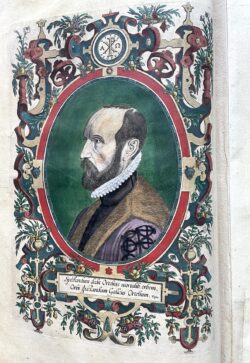
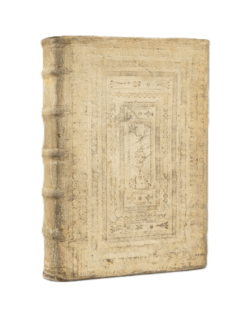
Complete copy, bound in a contemporary vellum binding stamped with multiple friezes on the covers and 5 raised bands on the spine, 358 f., Folio. Illustrated edition with an engraved allegorical frontispiece, the arms of the Kingdom of Spain on the verso, an engraved portrait of Ortelius, an architectural frontispiece (Parergon), and 156 engravings. including 151 engraved maps, 33 of which are in the Parergon, as well as 3 plates of views and 2 plates of costumes. Some pages of the text are foxed, and the stamp has been scratched off on the title page. Restoration work at the bottom of the two costume plates. Reinforcement in the margin of the inner hinges of 7 maps. H. 46 x W. 32 x D. 10 cm. / H. 18.11 x W. 12.6 x D. 3.94 inch.
The finest edition of this iconic atlas, considered to be the first true atlas (‘the first true atlas’, Van der Broecke). “The unique place occupied by Ortelius’ Theatrum in the history of cartography is mainly due to its status as “the world’s first regularly produced atlas” […] Its form and content set the standards for subsequent atlases” (Koeman 1969, III, 29). Ortelius’ atlas was revolutionary because it was the first attempt to present the geography of the world in a uniformly produced collection of maps of all known parts of the world. Ortelius designed the maps himself, basing his designs on the cartographic sources that he had at hand (and, equally revolutionary, also mentioning his sources on the maps), and once finished, had them engraved by Frans Hogenberg and Ambrosius and Ferdinand Aertsen. Finally, Gielis Coppens van Diest printed the maps, after which they could be coloured (also in a uniform style) and bound in a logical order in one volume. These atlases were a new phenomenon and proved to be very popular in Europe. Soon editions were published in various languages of Europe in print runs of a few hundred copies each.
A perfectly complete copy of the Theatrum Orbis Terrarum, the Parergon and the Nomenclator Ptolemaicus in its original colours.
Literature: Van de Krogt/ Koeman IIIA, 31:053; Adams O-335; Phillips 382; Shirley 122
